A whippet grows up in three acts — a soft, gangly puppy; a testing adolescent; and a calm, devoted adult. Here is what each one asks of you.
There is a particular pleasure in raising a whippet, and a particular discipline to it. This is a sensitive, fast, deeply affectionate dog — bred for a hundred metres of open sprint and a long evening close to your feet. Bring both halves up well and you have one of the easiest companions a home can keep. Rush them, or raise the dog with a heavy hand, and a whippet simply folds quietly inward.
This guide follows a whippet from the day it comes home to the day it is fully, contentedly grown — and the small, steady things that shape the dog along the way.
The Puppy
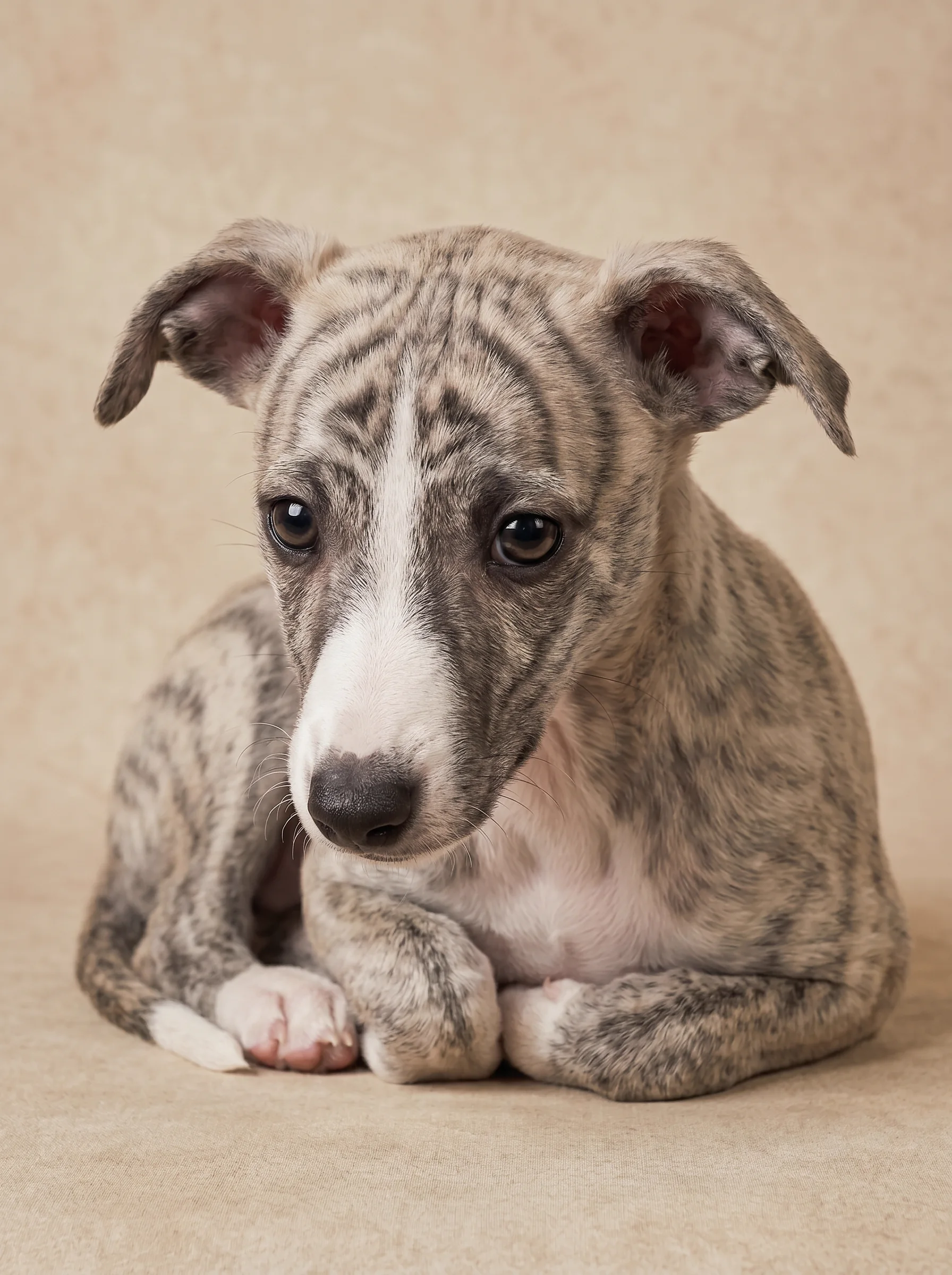
A whippet puppy is all ears and elbows — gangly, soft, and far more fragile than the adult it will become. The first job is not training. It is calm.
The first days, and the first nights
Give the puppy a quiet, warm place of its own, and let the early days be slow. Whippets read a household's mood closely; an anxious home makes an anxious dog. The nights are gentler than with most breeds — a whippet wants to be near you, so a bed close to your own settles it quickly. Expect a week or two of broken sleep, no more.
House-training, gently
Routine does the work: out after every sleep, every meal, every burst of play — and praise, never scold, when it goes right. The whippet's sensitivity counts in your favour here. It genuinely wants to please you, and a harsh word lands far harder than you intend.
Socialisation over obedience
At this age, gentle exposure matters more than commands. Unhurried introductions — to traffic, to other dogs, to being handled, to having paws and ears touched — build the steady adult. And begin, early and lightly, letting the puppy wear something soft for a few minutes at a time. A whippet's thin coat means warmth will be part of its whole life; a dog introduced to it as a puppy never thinks to question it.
The Adolescent
Somewhere around six months, the soft puppy becomes a long-legged adolescent, and the easy weeks pause. This is the testing age — the whippet is bolder, faster, and briefly a little deaf to its own name.
Recall — the great project
The single most important task of these months is recall. A whippet is a sighthound: it carries a real prey drive, and a dog in full sprint after a hare or a squirrel cannot hear you and will not stop. Build a "come" that is rock-solid inside a safe, enclosed space long before you trust it in the open. Make returning to you the best thing that happens on a walk — reward it richly, every single time — and never call the dog to you for something it dislikes.
Patience over force
An adolescent whippet responds beautifully to calm, positive, reward-based training, and shuts down completely under harsh correction. Keep sessions short, kind and frequent. If a session sours, stop — you lose far more by pushing through than by simply waiting until tomorrow.
The right kind of exercise
Exercise needs grow now, but a whippet's needs are specific rather than large: short, intense bursts of free running, not long forced marches. A flat-out sprint in a secure field, and the dog is content for the rest of the day.
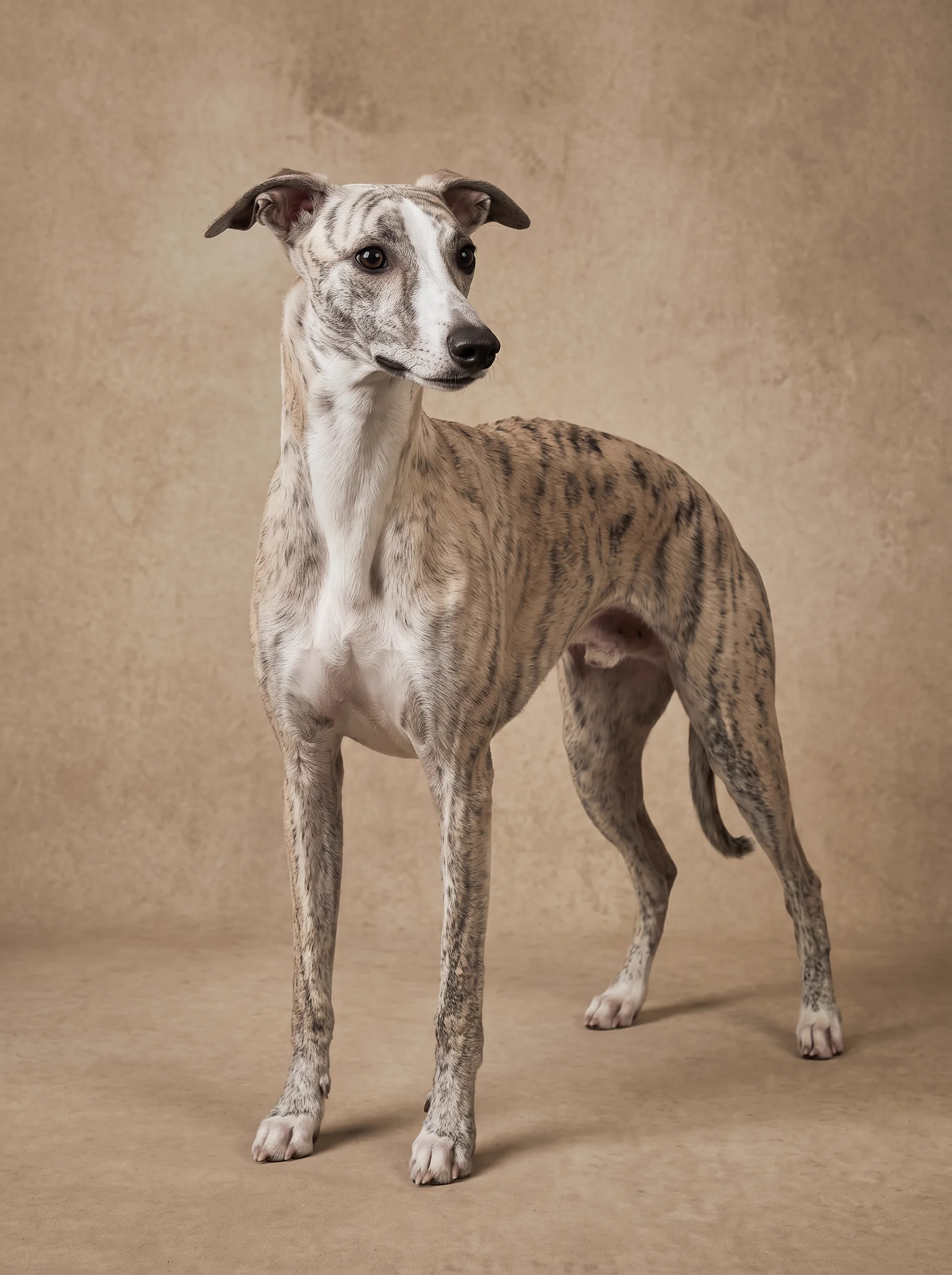
“A whippet in full sprint cannot hear you. The work is done long before the lead comes off.”
The Adult Whippet
By eighteen months or so the whippet is grown, and the contrast that defines the breed settles fully into place. Outdoors: explosive, joyful, astonishingly fast. Indoors: one of the quietest, calmest, lowest-effort dogs you could share a room with. A grown whippet will happily sleep much of the day away, curled into the smallest possible shape on the warmest surface it can find.
Its needs stay modest. A daily chance to run flat-out, a soft place to land, and the company of its people — that is close to the whole list. Whippets bond intensely and do not like to be left for long; this is a dog for a home that is often in.
The one thing that never changes
With age, the whippet grows calmer in almost every way but one — the cold. It wears a single, paper-thin coat over almost no body fat, and it feels autumn wind, winter chill and even a cool indoor evening keenly. Shivering is not drama; it is the dog telling you the plain truth. For this breed, a well-cut coat is not costume. It is the same ordinary care as a warm bed and a good dinner.
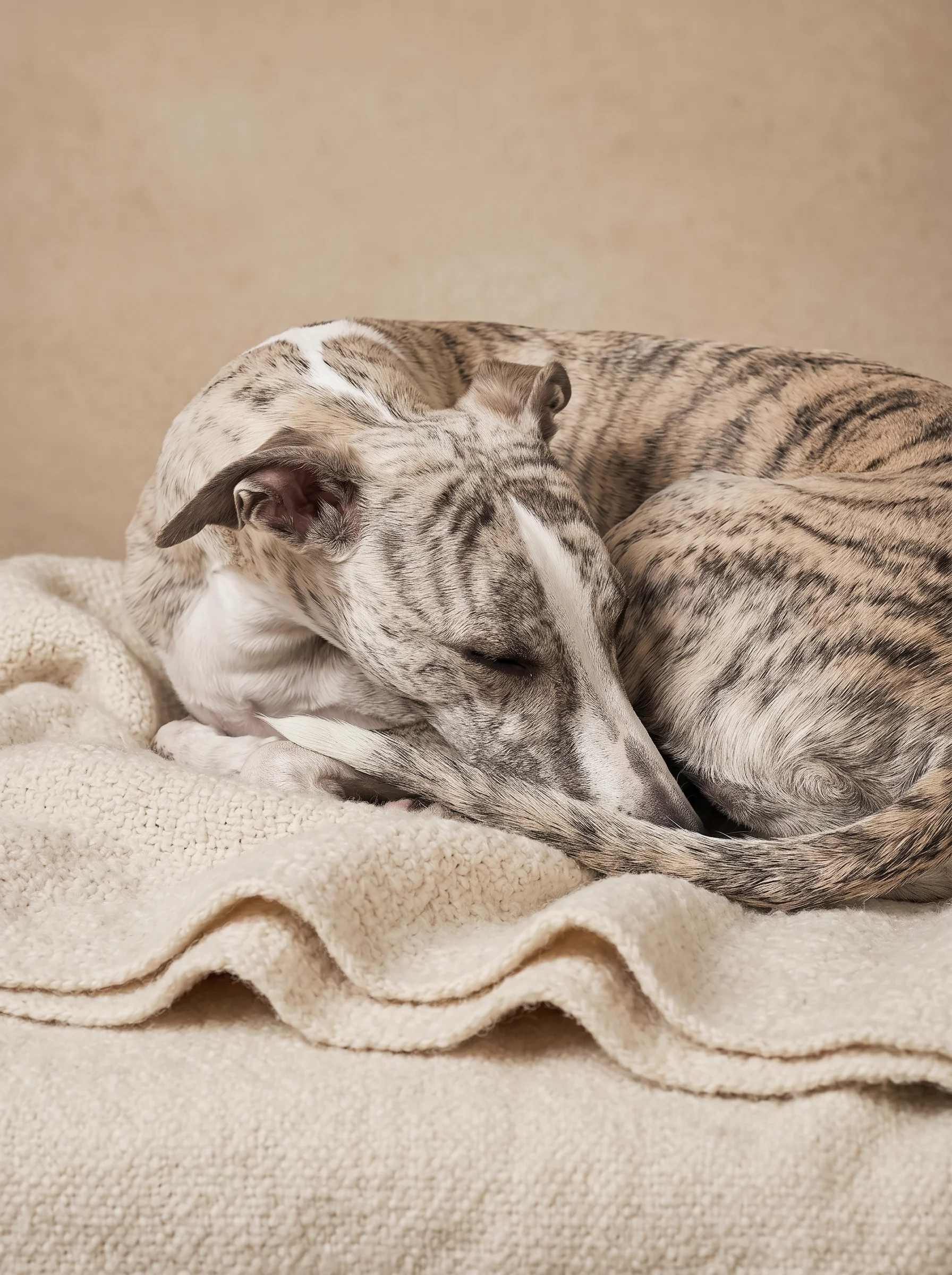
Raise a whippet gently through its three ages and it asks for very little in return — only warmth, a run, and your company. The first you can make. The second you can find. The third the dog has already given you.